
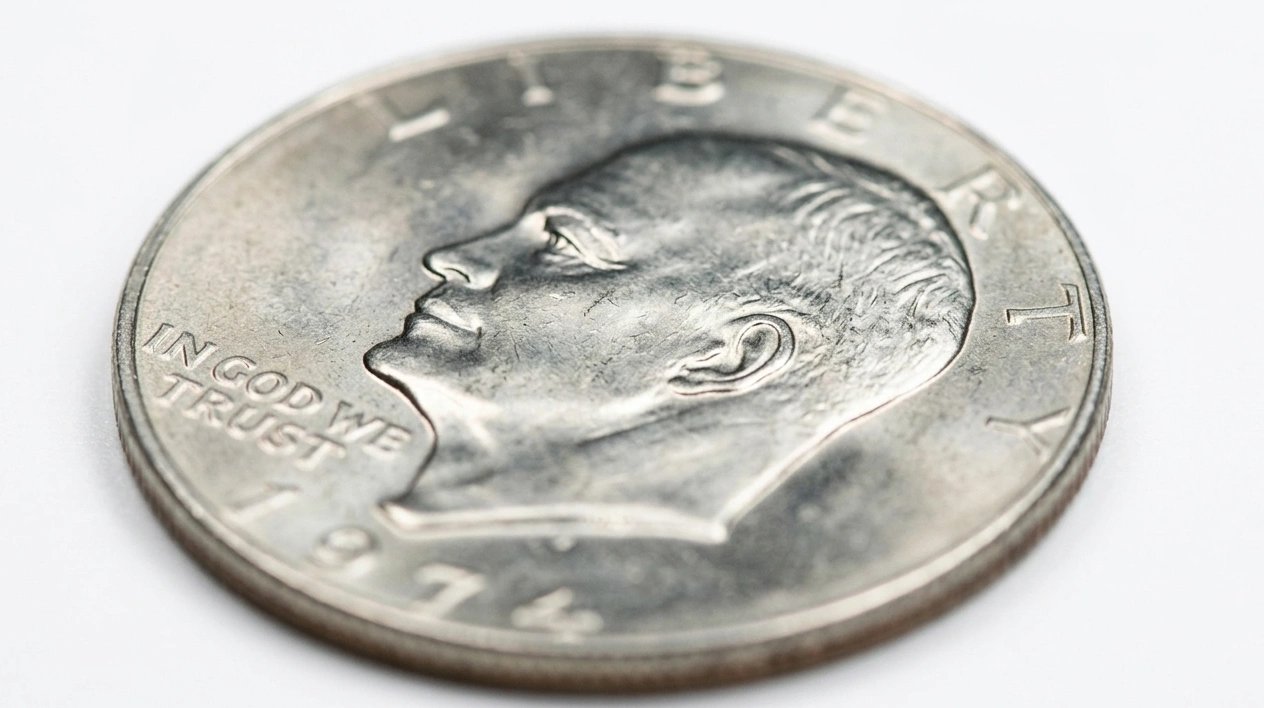
A surprisingly common misunderstanding continues to shape online searches.
Many owners of 1974 coins mistakenly classify them as precious metal items.
This confusion creates unnecessary difficulties during appraisal.
Existence of two distinct material mixtures provokes such errors.
Coins released in 1974 split into circulation and collector types.
Circulation pieces consist entirely of mixed industrial alloys.
Such specimens demonstrate high 1974 silver dollar value at auctions.
Collector versions contain 40 percent silver content.
Distinguishing these two types requires understanding technical minting processes.
Coin Type | Material Content | Weight in Grams | Edge Type |
Circulation | Industrial alloy | 22.68 | Reeded |
40 percent Silver Proof | 40 percent silver, 60 percent alloy | 24.59 | Reeded |
40 percent Silver Uncirculated | 40 percent silver, 60 percent alloy | 24.59 | Reeded |
Observed mass differences confirm variance between products.
Minting Error Classifications
Identifying rare errors increases total market worth.
Double Die
Doubled image elements occur due to die misalignment during striking.
Shifted dies produce doubled letters in LIBERTY and IN GOD WE TRUST.
Off Center
Coins displaying image shifting away from the center generate interest.
Measurement of misalignment happens via percentage of total disk area.
Shifts exceeding 5 percent significantly increase collector price.
Rotated Die
Rotation of the die by 180 degrees creates a unique error type.
Verification occurs through comparing obverse and reverse orientation.
Market Price Dynamics
Valuation depends on preservation grade and certification status.
Reviewing data from professional auctions tracks cost fluctuations.
Market price trends for 40 percent silver proof items:
2023 average price: $13.20 per unit.
2024 average price: $14.80 per unit.
2025 average price: $15.10 per unit.
2026 average price: $15.80 per unit.
Consistent annual growth remains visible.
Average price increase per annum totals approximately 6 percent.
For circulation coins, dynamic trends appear different.
2023 worth: $1.15 per unit.
2024 worth: $1.20 per unit.
2025 worth: $1.25 per unit.
2026 worth: $1.30 per unit.
Value growth of circulation pieces stays minimal.
Metal Identification Methods
Accurate determination requires specific procedural execution.
Using high-precision scales acts as a primary step.
Mass totaling 24.59 grams indicates 40 percent silver presence.
Mass totaling 22.68 grams confirms absence of silver.
Acoustic testing produces definitive results.
Silver coins generate resonant sounds when striking surfaces.
Industrial alloy specimens produce dull sounds.
Applying the coin value app tests excludes counterfeit items.
Silver lacks ferromagnetic properties.
Certification Impact
Professional grading alters final coin price.
Independent appraisal services provide objective status reports.
High-grade coins command prices exceeding lower-grade counterparts.
Price differences between MS65 and MS67 grades reach 40 percent.
Official certification resolves disputes concerning metal authenticity.
Verified grades increase liquidity within numismatic markets.
Valuation Factors
Objective indicators determine item worth.
Key factors:
Surface preservation
Error presence
Mint origin
Total mintage volume
Mint Mark Significance
Coins displaying an S mark originated in San Francisco.
S markings on 1974 issues frequently signify silver content.
Pieces without marks originated in Philadelphia.
Philadelphia output contains only industrial alloys.
Markings displaying a D indicate Denver origin.
Denver products also exclude silver content.
Surface Preservation Analysis
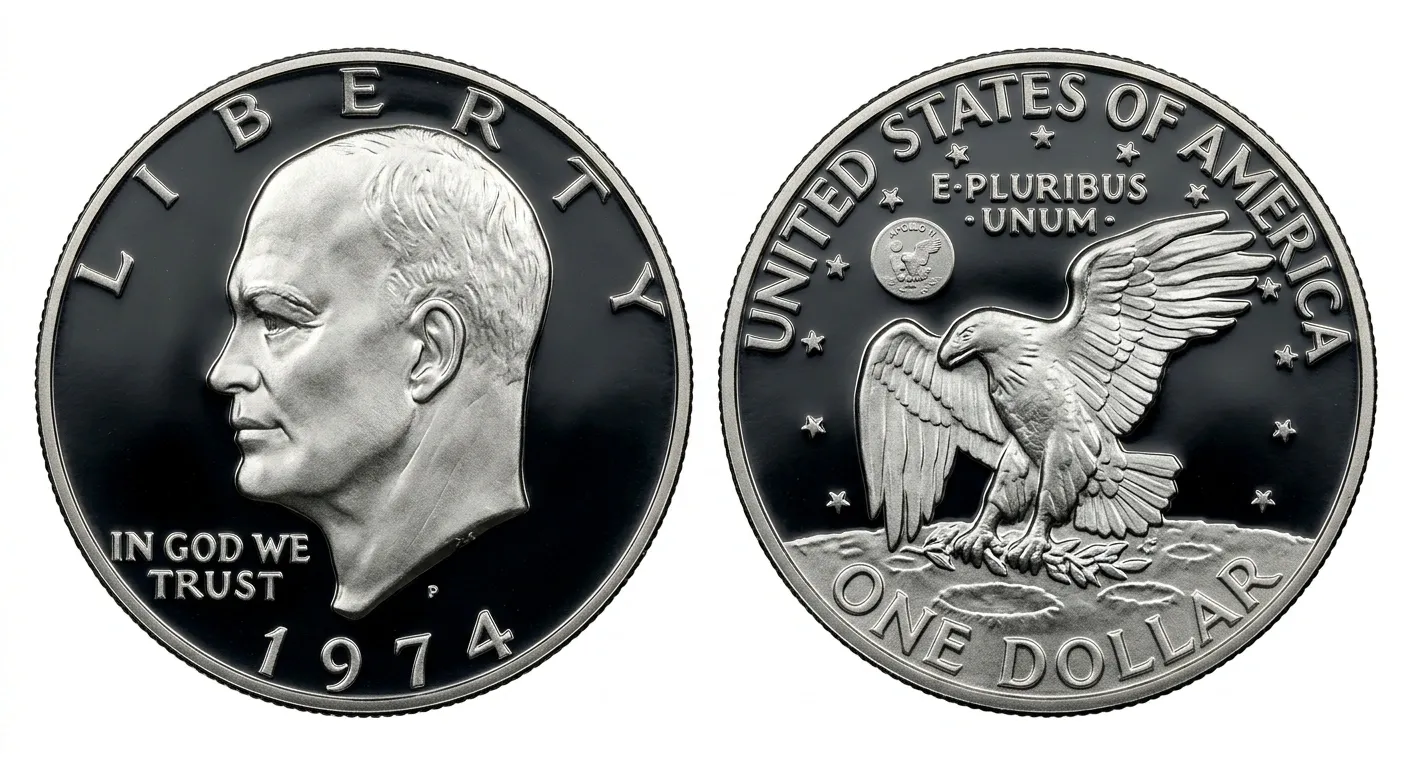
Assessing condition requires using a coin identifier.
Deep scratches decrease overall item worth.
Surface oxidation demands careful treatment.
Professional restoration preserves original luster.
Improper chemical usage destroys specimen value.
Storage Recommendations
Establishing environments preventing corrosion ensures long-term preservation.
Acid-free capsules
Humidity exclusion
Dark storage locations
Thermal regulation
Common Misconceptions
Erroneous beliefs hinder accurate assessment.
Following facts disprove prevailing myths.
1974 marks no production of 90 percent silver dollars.
40 percent silver dollars appeared exclusively within collector sets.
Finding silver specimens in general circulation remains extremely rare.
Market Sales Statistics
Sales analysis reveals high demand for excellent condition specimens.
PR70 grade transactions show rising interest.
2025 market value for PR70 totaled $52.
2026 market value reached $58.
Investors favor certified items over raw pieces.
Lack of certification reduces rapid sale probability.
Mintage Impact on Price
Production volume correlates directly with rarity.
Collector set mintages remained restricted.
Limited production creates market supply deficits.
→ Rising demand for rare series
→ Elevated overall item worth
→ Price stabilization at high levels